

For individuals living with a chronic condition, infusion day can feel like a part-time job.
The travel, the waiting rooms, the clinical environment—it’s a necessary but often disruptive routine that revolves around treatment. It’s easy to assume this disruption is an unavoidable part of managing your health.
But what if the safest, most comfortable, and most efficient place for your infusion wasn’t a medical facility at all?
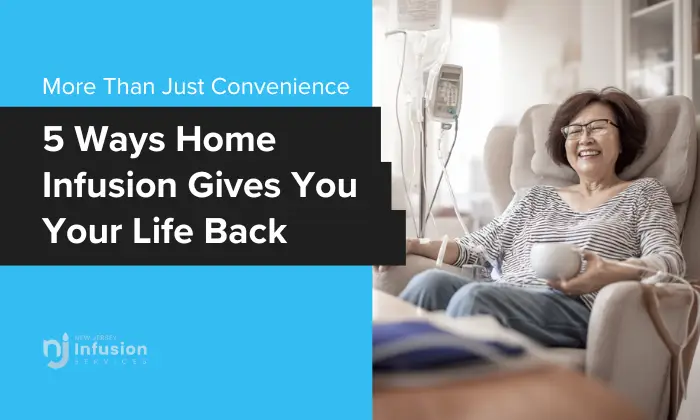
The surprising answer for many is their own home.
This article moves beyond small conveniences to explore the powerful, often overlooked advantages of home infusion therapy—advantages that can transform your health, reclaim your time, and restore your sense of self.
Your Home Is a Fortress Against Infection
It may seem counter-intuitive, but for many patients—especially those who are immunocompromised—the home is a far safer environment for infusion than a hospital or clinic.
Healthcare facilities, by their very nature, concentrate sick individuals in confined spaces.
Despite cleaning protocols, these environments can harbor resistant organisms and expose you to circulating pathogens like influenza, RSV, and norovirus.
This isn’t just a concern for those with primary immunodeficiency; it’s a critical factor for patients whose medication (like infliximab) suppresses their immune system, or for older patients who are more vulnerable to infection.
Home infusion eliminates this exposure entirely. Instead of you going to a high-risk environment, a dedicated nurse comes to you, bringing sanitized equipment into a controlled setting.
This minimizes your contact with outside pathogens, creating a personal fortress where you can receive treatment without the added worry of a secondary infection.
Reclaim Your Identity Beyond “Patient”
The psychological impact of receiving treatment in a medical facility is profound.
The clinical setting can reinforce a “patient identity,” and the stress of the environment—often called “white coat syndrome”—can physically elevate blood pressure and anxiety.
Home infusion flips this dynamic.
By receiving care in your personal space, you shift the focus from illness back to wellness and daily life.
Imagine receiving your treatment while sitting in your favorite chair, with your pet nearby for emotional support, and your family present without the restrictions of visiting hours.
This isn’t just about feeling comfortable; it’s about how a familiar, low-stress environment can physically reduce anxiety and blood pressure, potentially improving your body’s tolerance to the treatment itself.
You maintain your sense of autonomy and normalcy, integrating treatment into life rather than life revolving around treatment.
Get Your Time Back—Days or Even Weeks of It
The practical benefits of home infusion therapy are enormous, and the most valuable is the time you reclaim.
Instead of fitting your life into the narrow appointment slots offered by a clinic, you can schedule infusions around your life—your work, your family’s needs, and your personal commitments.
Consider the hidden time costs of a facility visit: a four-hour infusion can easily consume six hours or more when you factor in travel, parking, and waiting room delays.
For those needing frequent infusions, the time saved isn’t just a matter of hours—it accumulates to days or even weeks over the course of a year. At home, that time is yours.
You can remain productive on a laptop, engage in hobbies, or simply rest comfortably, turning treatment time into usable time.
The Undivided Attention of a Dedicated Nurse
In a busy infusion center, nurses must divide their attention among multiple patients simultaneously. While they are highly skilled, this model makes truly personalized care a challenge.
Home infusion provides a completely different standard of care: a nurse who “focuses solely on you throughout the visit.”
This one-on-one attention means you get safer, more responsive treatment.
A dedicated nurse becomes deeply familiar with your specific patterns—the best vein for access, the optimal infusion rate you tolerate, and your typical response to medication.
This consistency means they are better equipped to “readily detect” subtle changes or the earliest signs of a reaction, allowing for immediate intervention and a higher quality of care.
Strengthening Your Circle of Support
Chronic illness impacts the entire family, and home infusion can make the journey easier for everyone.
The process naturally incorporates family members, allowing them to observe the infusion, learn to recognize symptoms, and become more knowledgeable and confident members of your support system.
This shared understanding can be incredibly reassuring for both you and your loved ones.
Furthermore, the convenience of home treatment reduces the burden on patients and caregivers alike, which directly improves treatment adherence.
This convenience doesn’t just reduce the burden for a single day; it makes the long-term support from family more sustainable, preventing caregiver burnout and strengthening your entire support system for the marathon of chronic illness management.
When receiving care doesn’t require a major life disruption, you are “less likely to skip or delay infusions.”
Is It Time to Rethink Where You Receive Care?
Choosing where you receive your infusion is about more than convenience; it’s about taking control of your care.
The benefits of home infusion represent a fundamental shift toward a model that prioritizes superior safety, psychological well-being, personalized attention, and ultimately, better health outcomes.
It transforms a medical procedure into an integrated and manageable part of your life.
You are entitled to a better quality of life, and it’s worth asking if your current treatment setting is truly serving you.
Given these powerful advantages, the most important question may not be if you can get your infusion at home, but why you haven’t considered it sooner.
If these benefits resonate with you, it may be time to start a conversation with your doctor.